This article includes an affiliate link. We may earn a commission if you buy through it, at no extra cost to you.
What makes infrared heating different?
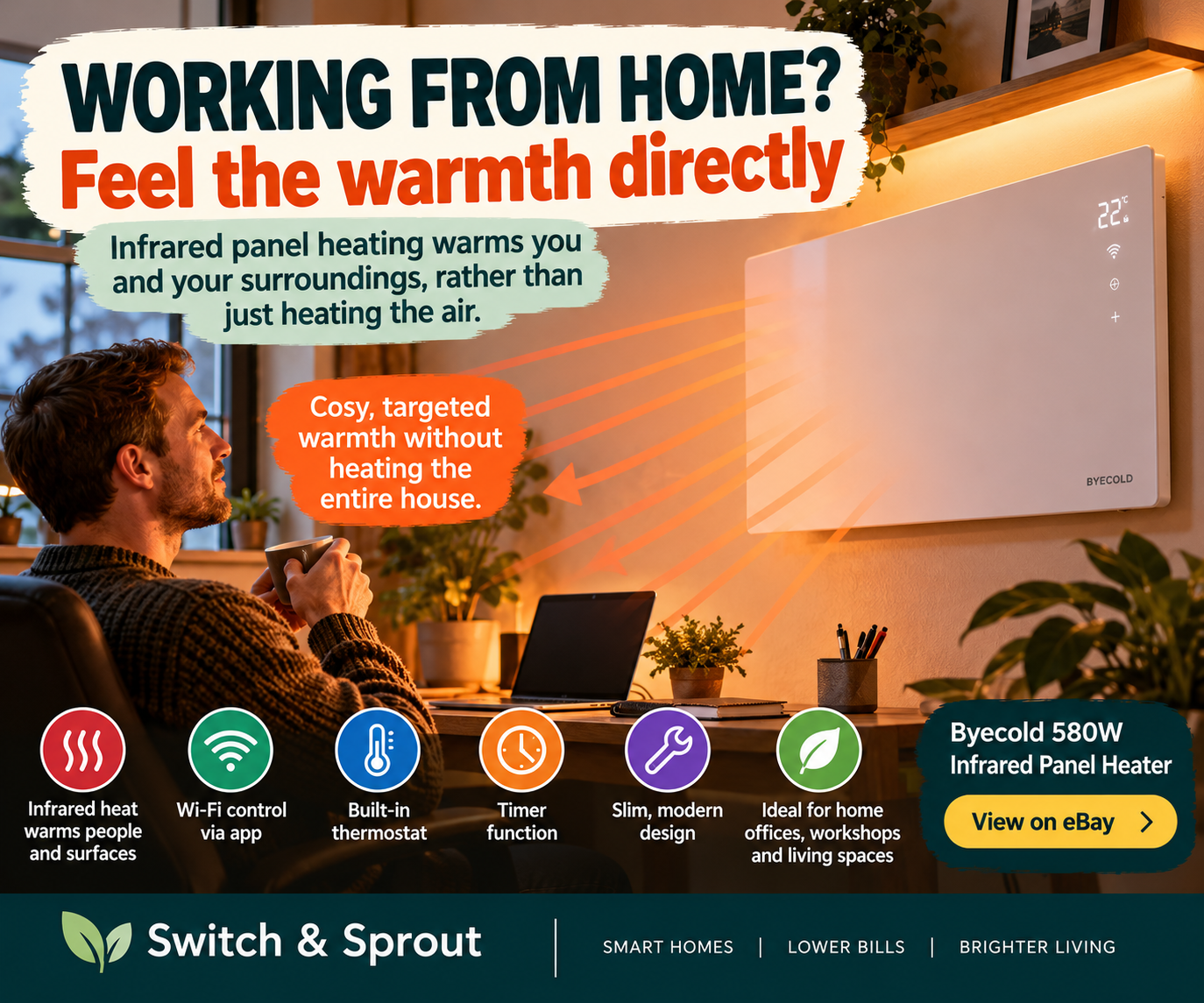
Infrared panels emit radiant energy that warms people and objects in their path, rather than relying primarily on circulating warm air. Those warmed surfaces can then transfer heat to the air. This makes radiant panels an interesting option for a home office or seating area where you spend time in one place.
When could an infrared panel make sense?
- Providing targeted comfort at a desk or in a particular seating area.
- Supplementing central heating in a room you use intermittently.
- Where a slim wall-mounted heater is preferable to a freestanding unit.
What does a 580W heater cost to run?
A 580W heater uses 0.58 kWh per hour at full output. At an illustrative electricity price of 25p/kWh, that is 14.5p per hour, or about 58p over four hours of continuous operation. Actual cost depends on your tariff and thermostat cycling.
What are the limitations?
Infrared warmth depends on the panel’s position, distance and whether furniture blocks the radiation. A panel does not magically produce more heat per kWh than another resistance heater. It may reduce the need to heat unused spaces, but it is not automatically cheaper than gas central heating or a heat pump. Follow manufacturer clearance and installation instructions, and check the exact listing specifications.
Byecold 580W infrared panel heater
The eBay listing supplied for this campaign describes a Byecold 580W infrared panel heater with Wi-Fi controls, thermostat, timer and wall-mounting. Verify the current specification and seller details before purchase.
Leave a Reply