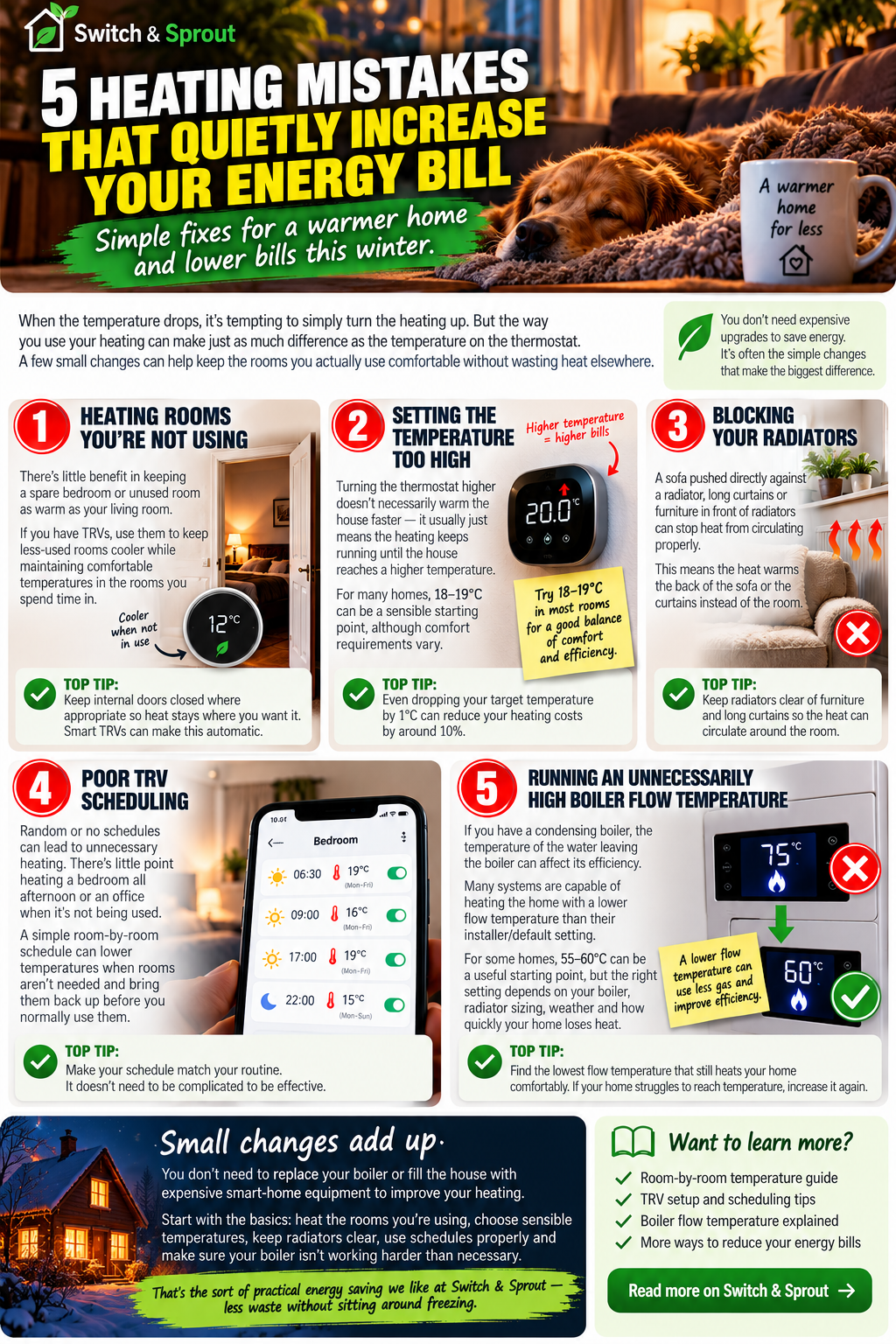
When the temperature drops, it’s tempting to simply turn the heating up. But the way you use your heating can make just as much difference as the number on the thermostat.
A few small changes can help keep the rooms you actually use comfortable without wasting heat elsewhere. Here are five common mistakes worth checking before winter really gets going.

1. Heating rooms you’re not using
There’s little benefit in keeping a spare bedroom or unused room as warm as your living room. If you have TRVs, use them to keep less-used rooms cooler while maintaining comfortable temperatures in the rooms you spend time in.
Keep internal doors closed where appropriate so heat stays where you want it. Smart TRVs can make this easier because temperatures can change automatically throughout the day.
2. Setting the temperature higher than you need
Turning the thermostat higher doesn’t necessarily warm the house faster — it usually just means the heating keeps running until the house reaches a higher temperature.
For many homes, somewhere around 18–19°C can be a sensible starting point, although comfort requirements vary. Even reducing your target temperature slightly can reduce the amount of energy needed over the heating season.
3. Blocking your radiators
A big sofa pushed directly against a radiator might look harmless, but it can interfere with heat circulating around the room. The same goes for long curtains covering radiators or furniture positioned immediately in front of them.
Giving radiators some breathing room allows more of their heat to reach the room rather than warming the back of the sofa.
4. Not making proper use of TRV schedules
Smart heating gets much more useful when it responds to how you actually use your home. There’s little point heating a bedroom to its evening temperature all afternoon, for example. Likewise, an office may only need heating during working hours.
A simple room-by-room schedule can lower temperatures when rooms aren’t needed and bring them back up before you normally use them. The trick isn’t making the schedule incredibly complicated. It’s making it match your routine.
5. Running an unnecessarily high boiler flow temperature
If you have a condensing boiler, the temperature of the water leaving the boiler can affect its efficiency. Many systems are capable of heating the home with a lower flow temperature than their installer or default setting.
For some radiator systems, experimenting around 55–60°C can be a useful starting point. The right setting depends on the boiler, radiator sizing, weather and how quickly your home loses heat.
The goal is to find the lowest flow temperature that still heats your home comfortably.
If your home struggles to reach temperature, increase it again rather than blindly sticking to a particular number. Always follow your boiler manufacturer’s guidance.
Small changes add up
You don’t necessarily need to replace your boiler or fill the house with expensive smart-home equipment to improve your heating.
Start with the basics: heat the rooms you’re using, choose sensible temperatures, keep radiators clear, use schedules properly and make sure your boiler isn’t working harder than necessary.
That’s the sort of practical energy saving we like at Switch & Sprout — less waste without sitting around freezing.
Leave a Reply